
The National Family Caregiver Support Program Has No Income Test. Here’s What It Actually Funds.
9 min read · Last updated August 20, 2026
- The National Family Caregiver Support Program (NFCSP) is a federal grant under the Older Americans Act, Title III-E, established in 2000 and funded through local Area Agencies on Aging (AAAs) – not a tax credit and not a cash benefit.
- Four caregiver groups qualify: caregivers of someone 60 or older, caregivers of any age caring for a person with dementia, relatives 55+ raising a grandchild under 18, and relatives 55+ (including parents) caring for an adult with a disability age 18 to 59.
- There is no federal income test. Your local AAA may still prioritize limited respite hours toward caregivers with the fewest other resources when demand outpaces funding.
- The program funds five service types: information, help accessing services, counseling/support groups/training, respite care, and limited supplemental services like home modifications or emergency response systems.
In this article
- What the NFCSP actually is
- Who qualifies
- What services it actually funds
- How to access it through your local Area Agency on Aging
- How this differs from the caregiver tax credit and general respite programs
- Frequently asked questions
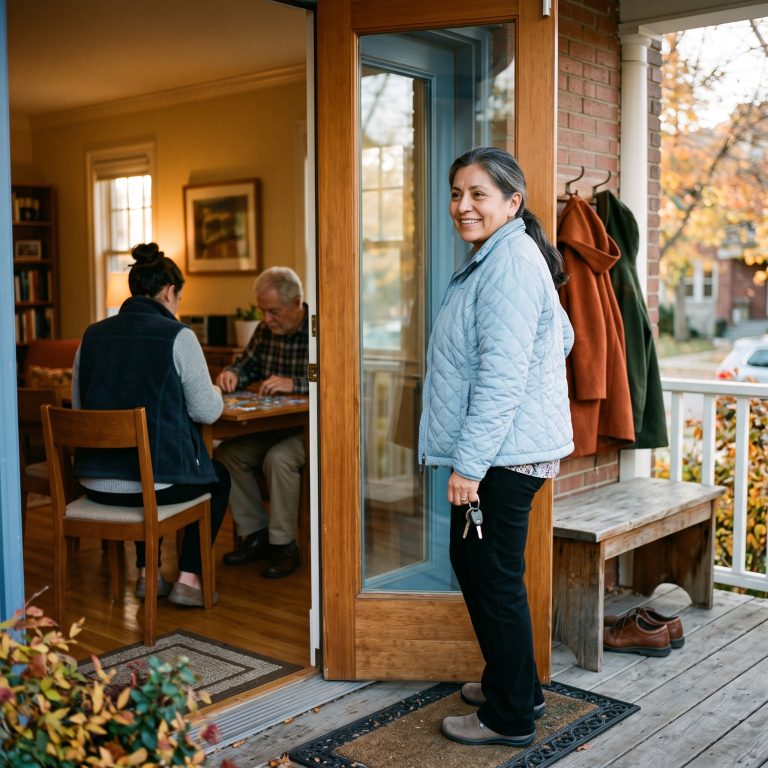
Denise, 52, had been driving across town three afternoons a week since March, when her husband’s mother, 81, was diagnosed with vascular dementia. She assumed the only help available was whatever she could pay for out of pocket, until a caseworker at her local senior center mentioned a program she’d never heard of: the National Family Caregiver Support Program (NFCSP). It funds real hours of relief care, counseling, and training for caregivers like her, and it isn’t a tax form or a bank deposit.
What the NFCSP actually is
The National Family Caregiver Support Program is a federal grant program created under Section 371 of the Older Americans Act (OAA), the 1965 federal law that funds services for older adults, specifically under its Title III-E provision. Congress established it in 2000 and it has run every year since, according to the Administration for Community Living (ACL), the federal agency inside Health and Human Services that oversees it.
The federal government does not run the NFCSP directly. It sends formula grants to every state, which pass the money down to a network of local Area Agencies on Aging (AAAs) – regional nonprofit or government offices that plan and pay for aging and caregiver services in a specific city or county. Your AAA decides which local providers deliver the services and how the funding gets split between respite hours, counseling, and the other categories below. That local layer is exactly why two caregivers in different counties can describe the “same” program differently. The federal rules set who can qualify and what the money can be spent on. The AAA sets the actual menu of providers, hours, and waitlists in your area.
Who qualifies
The NFCSP defines eligibility by caregiving role, not by the caregiver’s own age or income. According to ACL, four groups qualify:
- Adult family members or other informal caregivers of someone age 60 or older. This is the broadest category and covers most people caring for an aging parent, spouse, or other relative.
- Caregivers of any age caring for a person of any age with Alzheimer’s disease or a related dementia. This is the one exception to the “60 or older” rule. If you’re 35 and caring for a 58-year-old spouse with early-onset dementia, you still qualify.
- Grandparents or other older relatives, age 55 or older, raising a grandchild under 18. This does not include a child’s own parent – it’s for grandparents and other relatives who have taken on primary caregiving.
- Grandparents and other relatives, including parents, age 55 or older, caring for an adult age 18 to 59 with a disability.
Notice what’s absent from that list: there is no federal income or asset test anywhere in the eligibility rule. You do not have to prove you’re low-income to use the NFCSP, and your caregiving relative’s income doesn’t disqualify you either. What can vary locally is prioritization, not eligibility. If your AAA’s respite-care budget for the year runs out before every eligible caregiver gets served, it may direct the remaining hours first toward caregivers with the least other support – not because you failed an income test, but because a limited local budget has to be rationed somehow. Ask your AAA directly what its current wait time looks like before assuming you don’t qualify.
What services it actually funds
ACL lists five categories of services the NFCSP funds. Not every AAA offers all five at full strength – budgets and local provider networks vary – but this is the full menu the federal program is designed to pay for:
- Information about available services. Basic navigation help: what exists in your area and what it costs.
- Assistance accessing services. Hands-on help applying for and enrolling in the services you’re eligible for, including help with paperwork.
- Individual counseling, support groups, and caregiver training. One-on-one counseling for caregiver stress, facilitated peer support groups, and skills training (safe lifting and transfers, managing dementia-related behaviors, medication routines).
- Respite care. Temporary relief care so you can take a break, run errands, or simply sleep – delivered in-home, at an adult day center, or occasionally as short-term overnight care, depending on what your AAA contracts for locally.
- Supplemental services, on a limited basis. A smaller, capped category that can include things like minor home modifications (grab bars, ramps) or a personal emergency response system, when a local provider offers them and funding allows.
That last category is worth flagging because it’s easy to assume “home modifications” is its own separate program. Under the NFCSP, it’s a limited add-on, not a guaranteed benefit – ask your AAA what it currently funds under this category rather than assuming a specific item is covered.

How to access it through your local Area Agency on Aging
There is no national application or federal website that enrolls you directly. Access runs entirely through the AAA that covers your county. The fastest way to find it:
- Call the Eldercare Locator at 1-800-677-1116, a free, federally funded phone and referral service run by ACL that connects you to your specific local AAA. Weekdays, 9 a.m. to 8 p.m. Eastern.
- Or search directly at eldercare.acl.gov, which links to state and local Area Agency on Aging contact information by ZIP code.
- Ask specifically for the National Family Caregiver Support Program when you call your AAA – naming the program by name gets you routed to the right intake staff faster than a general “caregiver help” request.
- Expect an intake conversation, not a form you submit alone. A caseworker will ask about your caregiving role and the person you care for, then tell you what’s currently available (respite hours, support groups, training sessions) and whether there’s a waitlist.
There is no federal deadline or enrollment window. You can call any time of year.
How this differs from the caregiver tax credit and general respite programs
This is the point where most caregivers get confused, and it’s worth being direct about it: the NFCSP, the federal or state caregiver tax credit, and a generic “respite care program” are three different things that happen to overlap in subject matter.
| Factor | NFCSP | Caregiver tax credit |
|---|---|---|
| What it is | A federal grant program that funds direct services | A dollar-for-dollar or deduction-based reduction on your tax bill |
| When you get the benefit | Year-round, as services are used | Once a year, when you file taxes |
| How you access it | Contact your local Area Agency on Aging directly | Claim it on your tax return, usually with a dependency or expense test |
| Income test | None federally; local prioritization only | Often has income phase-outs or dependency income limits |
| What it actually delivers | Respite hours, counseling, support groups, training, limited supplemental services | A reduction in taxes owed, not a service |
| Best for | Caregivers who need an actual break or hands-on support now | Caregivers who already qualify and want to lower their tax liability |
The respite-care confusion runs the other direction. Respite care is one of the five services the NFCSP funds, not a separate program you apply to instead of it. When people search for “respite care programs,” they’re often looking for the exact thing the NFCSP already provides – they just don’t know to ask their AAA by the program’s actual name. If your household already found a private respite-care provider on its own, the NFCSP is still worth a call, because your AAA may be able to fund some of those same hours through a contracted local agency instead of full out-of-pocket cost.
There’s no requirement to choose one or the other. A caregiver using NFCSP-funded respite care in July can still claim a caregiver tax credit the following spring if they otherwise qualify for it – the two programs don’t ask about each other.
Frequently asked questions
Do I have to be caring for a parent to qualify? No. The NFCSP covers caregivers of any relative or non-relative age 60 or older, spouses included. The only exception that broadens eligibility further is caring for someone with dementia at any age, and a separate category for grandparents and relatives raising a child or caring for a disabled adult.
Is there an income limit to use the National Family Caregiver Support Program? There is no federal income or asset test. Your Area Agency on Aging may prioritize limited respite hours toward caregivers with fewer other resources if local demand exceeds the year’s funding, but that isn’t the same as a means test blocking you from applying.
I’m 58 and raising my grandson. Do I qualify even though I’m not his parent? Yes, if you’re a grandparent or other relative (not his parent) age 55 or older raising a child under 18, you fall into one of the NFCSP’s four qualifying caregiver categories. Contact your local Area Agency on Aging directly to start intake.
Does the NFCSP pay me directly as the caregiver? No. It funds services delivered through providers your Area Agency on Aging contracts with, such as respite-care agencies or support-group facilitators. It is not a stipend or reimbursement paid to you personally.
What if my local Area Agency on Aging says respite hours are full for the year? Ask what’s next: many AAAs keep a waitlist, rotate funding at the new fiscal year, or can point you to counseling and support groups, which are funded separately from respite hours, in the meantime. Call back periodically rather than assuming the answer is permanent.