Medicare Part D’s $2,100 Cap Replaced the Donut Hole for Good in 2026
9 min read · Last updated August 23, 2026
- The 2026 annual out-of-pocket cap for covered Part D drugs is $2,100, up from the $2,000 starting cap in 2025.
- Once your true out-of-pocket spending on covered drugs hits $2,100, you pay $0 for the rest of the calendar year.
- The old four-phase system, including the “donut hole” coverage gap, no longer exists.
- The new Medicare Prescription Payment Plan lets you spread that $2,100 into monthly bills instead of paying it as it comes due, but you have to opt in through your plan.
In this article
- What the $2,100 cap actually covers
- Who this applies to, and who it doesn’t
- What changed from the old donut hole system
- The Medicare Prescription Payment Plan
- A real example: one senior’s drug costs before and after the cap
- What seniors get wrong about the cap
- Frequently asked questions
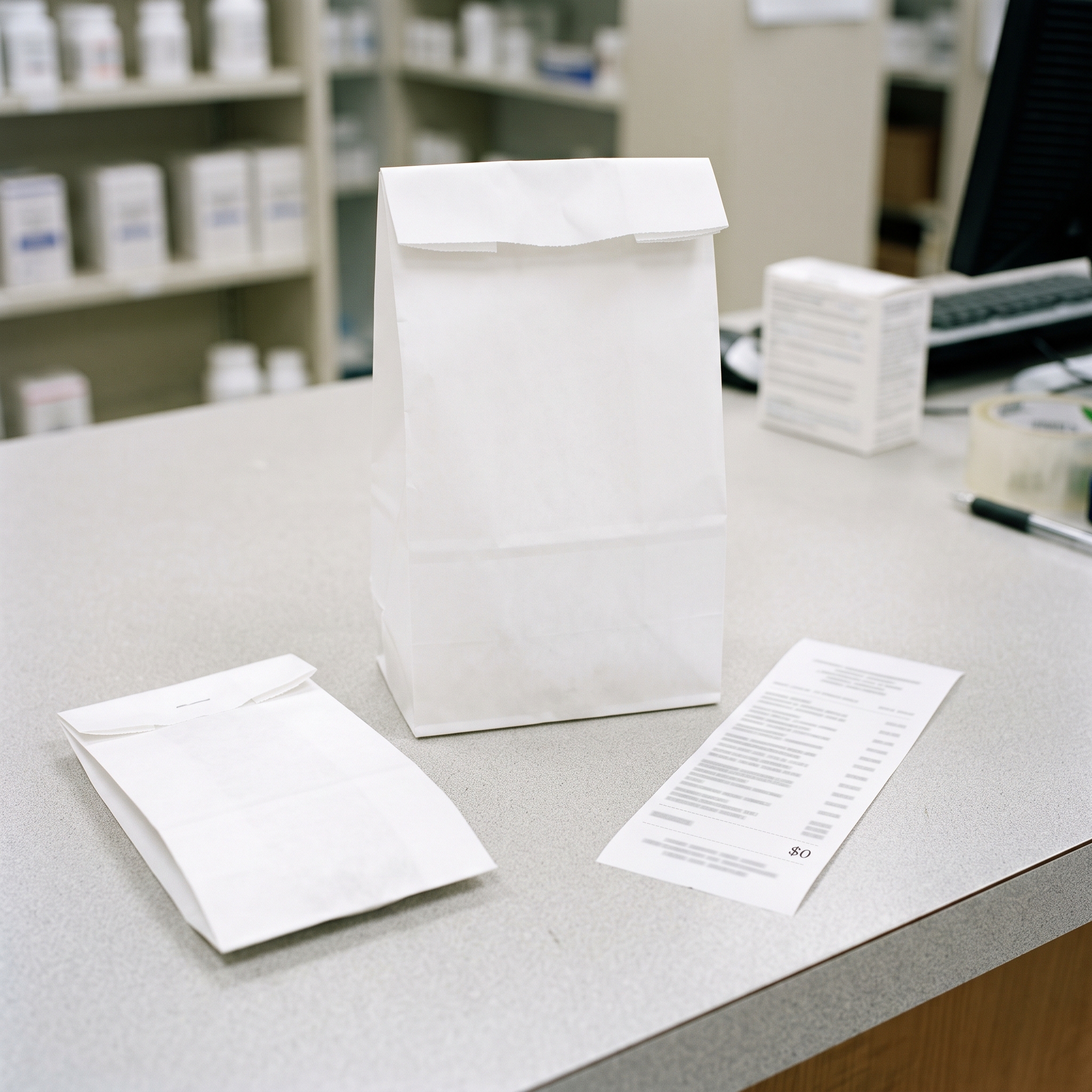
Carol Jensen, 71, picked up her heart and cholesterol prescriptions at the pharmacy counter in November and the receipt read $0, just as it had for months. She had already spent $2,100 out of pocket on covered drugs earlier in the year, the new annual cap Medicare set for 2026, and once she crossed it, her plan covered the rest of the year’s refills in full.
What the $2,100 cap actually covers
The Centers for Medicare & Medicaid Services (CMS), the federal agency that runs Medicare, sets a single annual limit on what a Part D enrollee pays out of pocket for covered prescription drugs. For 2026, that limit is $2,100, up $100 from the $2,000 cap that took effect when the rule first started in 2025. CMS adjusts the figure each year based on how much average spending on covered Part D drugs has grown, so expect it to keep rising slightly rather than staying fixed at $2,000.
Here is what counts toward that $2,100. Your plan’s deductible, if it has one, comes first. No Part D plan can charge a deductible above $615 in 2026. After that, you typically pay 25% coinsurance until your total out-of-pocket spending reaches $2,100. At that point you move into what Medicare calls catastrophic coverage, and you owe nothing more for covered drugs through December 31. Medicare.gov’s own Costs for Part D coverage page lays out this same three-stage structure.
One detail that trips people up: this caps your true out-of-pocket spending, not the sticker price of your drugs. Money paid on your behalf through Extra Help, the Part D Low-Income Subsidy, counts toward the $2,100 too, so a lower-income beneficiary who qualifies for Extra Help can combine both programs and often avoid most cost sharing entirely.
Who this applies to, and who it doesn’t
The $2,100 cap applies to anyone enrolled in a stand-alone Medicare Part D prescription drug plan, and to anyone enrolled in a Medicare Advantage plan that includes drug coverage, often called an MA-PD plan for short. If you have either kind of coverage, your out-of-pocket spending on covered drugs is tracked against this limit automatically. You do not apply for it separately. It is built into every Part D and MA-PD plan by federal rule.
The cap does not apply if you rely only on Original Medicare, Part A hospital coverage and Part B medical coverage, with no separate drug plan attached. Original Medicare does not cover most outpatient prescription drugs on its own, so there is no drug spending for a cap to limit. A retiree who skipped Part D because they take no regular medications is not protected until the day they enroll in a drug plan. The cap also covers only drugs on your plan’s formulary, the list it agrees to pay toward, so an out-of-formulary prescription filled without an approved exception falls outside the $2,100 count.
What changed from the old donut hole system
Before 2025, Part D ran on four phases each calendar year: a deductible, an initial coverage phase, a coverage gap known as the donut hole where cost sharing jumped, and a catastrophic phase that kicked in only after very high spending. The Kaiser Family Foundation, an independent health policy research organization, found that a Part D enrollee taking only brand-name drugs paid about $3,300 out of pocket in 2024 before reaching catastrophic coverage, which itself required roughly $8,000 in total drug spending. Spending never simply stopped.
The Inflation Reduction Act, a 2022 federal law that overhauled several Medicare drug pricing rules, eliminated the donut hole starting in 2025 and replaced the four-phase structure with the three stages described above: a deductible, a coinsurance phase, then $0 cost sharing once you hit the annual cap. CMS’s own fact sheet on the 2026 Part D benefit redesign confirms the $2,100 figure and this same phase-out. The donut hole, as a concept, no longer exists in the current benefit design.
The Medicare Prescription Payment Plan
Reaching the $2,100 cap still means paying real money, and most of it can land in the first two or three months of the year instead of spreading out evenly. To soften that, Medicare created the Medicare Prescription Payment Plan, sometimes shortened to M3P, a new option available since 2025 and continuing in 2026.
The Payment Plan does not lower what you owe. It changes when you owe it. Instead of paying at the pharmacy each time you fill a prescription, you pay $0 there and your plan bills you monthly for the rest of the year. There is no interest or enrollment fee, and every plan must offer it.
This is opt-in, not automatic. You enroll through your own plan, before the year starts or partway through once you see a high-cost month coming. If you participated in 2025, your plan should have sent a renewal notice, and you keep the option unless you opt out. Fall behind on the monthly bills and your plan can remove you, sending you back to paying at the pharmacy. Medicare’s Prescription Payment Plan page covers enrollment and missed payments.

A real example: one senior’s drug costs before and after the cap
Carol’s cardiologist has her on two brand-name medications that price out at $8,000 a year at her plan’s negotiated rate, a common total for someone managing a heart condition with brand-only drugs.
Under the rules that applied through 2024, a Part D enrollee using only brand-name drugs paid about $3,300 out of pocket before reaching catastrophic coverage, per the Kaiser Family Foundation figures above. Carol’s $8,000 in drug costs would have kept her paying donut-hole cost sharing well past that point.
Under the 2026 rules, Carol’s plan has a standard $615 deductible. After that, she owes 25% coinsurance until her spending reaches $2,100. That leaves $1,485 of coinsurance room ($2,100 minus $615), corresponding to $5,940 in drug costs at the 25% rate ($1,485 divided by 0.25). Add the $615 deductible and Carol reaches her $2,100 cap once $6,555, about 82%, of her $8,000 in annual drug costs have been dispensed. For the remaining $1,445, she pays $0.
Carol’s total out-of-pocket spending for the year: $2,100, capped, instead of the roughly $3,300 she would have paid under the pre-2025 system on the same prescriptions.
What seniors get wrong about the cap
The single most common mistake is assuming the $2,100 figure caps a monthly premium. It does not. The cap applies only to what you pay out of pocket for covered drugs, deductible and coinsurance combined. Your Part D or Medicare Advantage premium is a separate, ongoing cost billed every month regardless of where you stand against the $2,100 limit, and neither your Part B premium nor any Medigap premium counts toward this number at all. In a handful of states, a State Pharmaceutical Assistance Program will pay that separate Part D premium directly, which the federal cap never touches on its own. For the full picture of your total Medicare costs, see our guide on appealing an IRMAA (Income-Related Monthly Adjustment Amount) surcharge after a life-changing event, since Part B and Part D premiums can both carry this income-based surcharge, which has nothing to do with this cap.
The second mistake is assuming the cap applies automatically to everyone on Medicare. It only protects you if you are enrolled in a Part D or MA-PD drug plan. Someone relying solely on Original Medicare with no drug coverage attached gets no benefit from this rule, because there is no Part D spending being tracked in the first place. If a friend or relative mentions the $2,100 cap and you are not sure whether you have Part D coverage, confirm that before assuming you are protected.
Frequently asked questions
Does the $2,100 cap apply if I only have Original Medicare, with no separate drug plan? No. The cap only tracks spending on covered Part D drugs, so it only protects you if you are enrolled in a stand-alone Part D plan or a Medicare Advantage plan with drug coverage. Original Medicare alone does not cover most outpatient prescriptions, so there is no drug spending for the cap to limit until you actually enroll in a plan.
Does reaching the cap also stop my monthly premium? No. The $2,100 cap covers only your out-of-pocket costs for covered drugs, deductible and coinsurance combined. Your monthly Part D or Medicare Advantage premium keeps being billed every month regardless of where your drug spending stands, and it is tracked completely separately from the annual cap.
I already get Extra Help. Does the Medicare Prescription Payment Plan still help me? It can, though less dramatically. Extra Help, the Part D Low-Income Subsidy, already lowers or eliminates most of your deductible and coinsurance, so you may reach $0 cost sharing faster than the $2,100 cap. The Payment Plan mainly helps beneficiaries who still owe real coinsurance dollars and want those spread monthly instead of paid upfront.
How do I actually sign up for the Medicare Prescription Payment Plan? You opt in through your own Part D or Medicare Advantage plan, not through Medicare.gov directly. You can enroll before the plan year starts or partway through once you see high drug costs coming. Your plan must process a mid-year enrollment request within 24 hours so a pharmacy fill is not delayed.
If I switch drug plans mid-year, does my $2,100 progress carry over? Generally yes. Your true out-of-pocket spending on covered Part D drugs for the calendar year follows you, and a new plan is required to account for what you already paid toward the annual limit when you switch during the same plan year. Confirm the transfer with your new plan directly when you enroll.