
A Dependent Grandchild Can Draw 50% to 75% of a Grandparent’s Social Security Benefit. Here’s the One Legal Test That Decides It.
8 min read · Last updated September 1, 2026
- A dependent grandchild’s monthly benefit equals 50% of a living grandparent’s Social Security benefit amount, or 75% if the grandparent has died – real math further down.
- To qualify, the grandchild’s own parents must be deceased or disabled at the exact point the grandparent became entitled to retirement or disability benefits, or died. Being raised by a grandparent today isn’t enough on its own.
- The grandchild must have started living with the grandparent before turning 18, and received at least half their support from the grandparent for the full year before that same trigger date.
- A family maximum caps the total paid out on one grandparent’s earnings record, so a grandchild’s share can shrink if other dependents draw on the same record too.
In this article
- What this Social Security benefit actually is
- Who qualifies: the two-part legal test
- What the benefit pays
- How to apply
- What grandparents get wrong
- Frequently asked questions
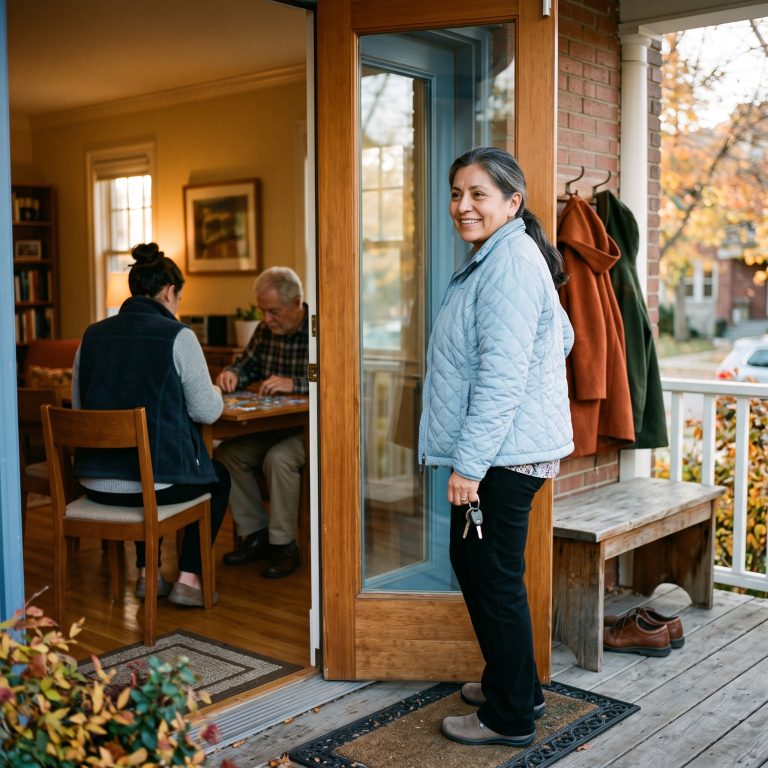
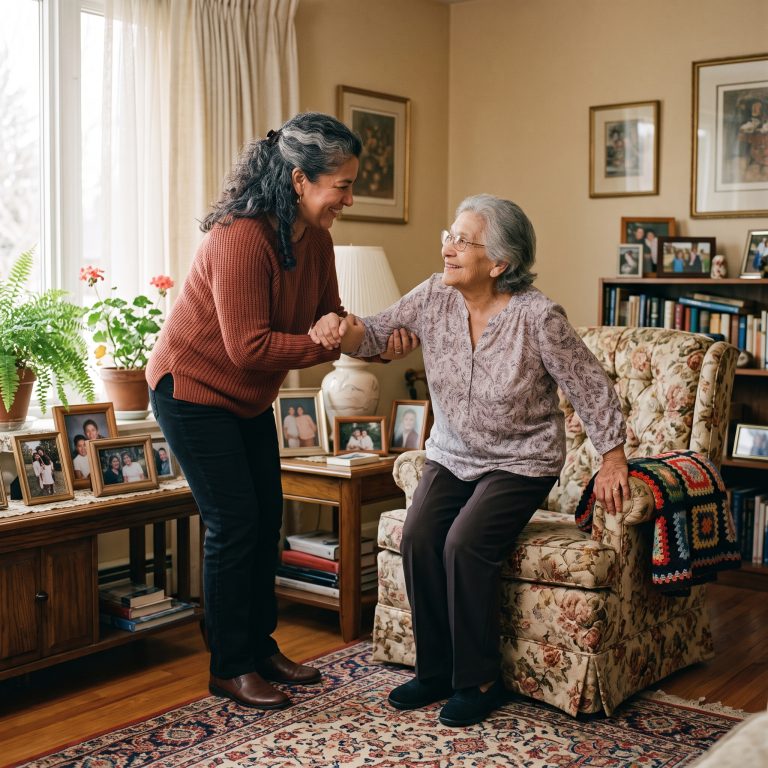
Denise, 63, has raised her grandson Elijah since he was four, after her daughter died in 2021. When Denise filed for her own Social Security retirement benefit this year, a Social Security Administration (SSA) representative asked her a question she wasn’t expecting: had Elijah been living with her, and mostly supported by her, before this application. That single question decided whether Elijah could also draw a monthly benefit on Denise’s earnings record.
What this Social Security benefit actually is
Most people know Social Security pays a benefit to a worker’s minor children when that worker retires, becomes disabled, or dies. Fewer people know the same earnings record can pay a benefit to a grandchild or step-grandchild, under a separate set of rules laid out in the Code of Federal Regulations (CFR), specifically 20 CFR 404.358 and 20 CFR 404.364.
This isn’t a tax-dependent designation and it isn’t a state child-welfare benefit. It’s Social Security treating a grandchild, for benefit purposes only, as though they were the grandparent’s own child – but only when a real legal relationship exists between the grandchild’s dependency and the grandparent’s earnings record. A grandparent simply having custody, guardianship, or informal day-to-day responsibility for a grandchild does not, by itself, create that relationship. SSA’s own internal policy manual, the Program Operations Manual System (POMS), spells out the requirements in GN 00306.235.
Who qualifies: the two-part legal test
SSA runs two separate tests, and a grandchild has to clear both.
Test 1 – the parent condition. The grandchild’s natural or adoptive parents must be either deceased or disabled (under SSA’s own strict disability standard) at one specific moment: the month the grandparent became entitled to retirement or disability benefits, or the month the grandparent died. If the grandparent had a period of disability that continued straight through to becoming entitled to benefits or dying, that earlier disability-onset date counts instead. This timing detail trips up almost everyone – it’s covered in more detail below.
Test 2 – the dependency condition. Per 20 CFR 404.364, the grandchild must have:
- Started living with the grandparent before turning 18, and
- Lived with the grandparent in the United States and received at least half their support from the grandparent for the full year immediately before the same trigger month used in Test 1.
If the grandchild was born during that one-year window, SSA doesn’t require a full 12 months of support – it uses a “substantially all of the period” standard instead, measured from the child’s date of birth forward. Living with the grandparent and receiving at least half support for that whole shorter window generally satisfies it.
Neither test cares about legal custody paperwork, a will, or who claims the child on a tax return. They care about two things only: whether the parents’ status (deceased or disabled) lines up with the grandparent’s own SSA timeline, and whether the actual living and support arrangement existed before that timeline point.
What the benefit pays
Under 20 CFR 404.353, a qualifying grandchild’s monthly benefit is calculated as a share of the grandparent’s primary insurance amount (PIA) – the base dollar figure Social Security uses before any adjustments for claiming age:
- 50% of the PIA if the grandparent is alive and collecting retirement or disability benefits.
- 75% of the PIA if the grandparent has died.
A worked example. Say Denise’s own retirement benefit works out to a primary insurance amount of $2,400 a month. While Denise is alive and collecting, Elijah’s benefit as a qualifying dependent grandchild would be $2,400 x 0.50 = $1,200 a month. If Denise later dies, Elijah’s benefit converts to a survivor benefit worth $2,400 x 0.75 = $1,800 a month, for as long as he stays eligible.
Both figures are subject to a family maximum – a cap Social Security applies to the total amount paid out to everyone drawing on one earnings record in a given month. If Denise also has a spouse or another dependent child collecting on her record at the same time, each person’s share, including Elijah’s, can be reduced proportionally so the combined total doesn’t exceed that cap.
The benefit generally continues until the grandchild turns 18, or 19 if they’re still a full-time student who hasn’t finished secondary school, and it can continue indefinitely if the grandchild has a qualifying disability that began before age 22.
How to apply

There’s no separate “grandchild benefit” application form. The grandparent – or whoever will manage the child’s benefit – applies for the child’s benefit on the grandparent’s record the same way any dependent applies, but a grandchild claim almost always requires a phone or in-person appointment rather than the fully online application, because SSA needs to review documentary proof of the relationship before paying anything.
Expect to provide:
- The grandchild’s birth certificate, to establish the parent-child link between the grandchild and the grandparent’s own child.
- Proof of the parent’s death (a death certificate) or disability (medical evidence or an existing SSA disability determination).
- Evidence of when the grandchild moved in and when support began – school enrollment records, medical records listing the grandparent’s address, or sworn statements, dated as early as possible.
Because a minor generally can’t manage their own benefit payments, the grandparent typically needs to also apply to become the child’s representative payee – the person SSA designates to receive and account for the child’s monthly payment. That’s a separate application from the benefit claim itself, and skipping it is one of the most common reasons an otherwise-approved grandchild benefit gets delayed.
What grandparents get wrong
Assuming today’s situation is what SSA checks. This is the mistake that catches the most grandparent caregivers off guard. SSA doesn’t ask whether the parents are currently deceased or disabled – it asks whether they were deceased or disabled at the specific month the grandparent’s own retirement or disability entitlement began, or at the month the grandparent died.
There’s one important exception worth knowing: even if a grandchild didn’t qualify while the grandparent was alive and collecting, they can still qualify for a survivor benefit later if the parent-status and living-arrangement conditions are both met at the time the grandparent eventually dies. The two tests get evaluated independently at each trigger point, not just once.
Treating this like a tax-dependent question. Claiming a grandchild as a dependent on a federal tax return uses entirely different rules than Social Security’s dependency test, and satisfying one doesn’t satisfy the other. A grandparent can legitimately claim a grandchild on their taxes for years without that grandchild ever qualifying for a Social Security benefit on their record, if the parent condition was never met at the right moment.
Missing the before-18 requirement. If the grandchild didn’t start living with the grandparent until after they turned 18, this provision doesn’t apply at all, regardless of how dependent the grandchild later became or how deceased or disabled the parents are.
Assuming informal caregiving is enough. Raising a grandchild day to day, even for years, doesn’t put them on the record automatically. Someone has to file the claim, and SSA has to verify the proof. A grandchild who would have qualified years ago but was never claimed doesn’t get back-pay for all those missed years automatically – it depends on how far back the claim can be applied, so applying as soon as both conditions are met matters.
Frequently asked questions
Does legally adopting my grandchild change any of this? Yes – if you legally adopt your grandchild, they generally qualify as your adopted child rather than under the grandchild-specific rules, which can be a more direct path. If your spouse adopts your grandchild after your death, separate rules in the same regulations may still make the child eligible on your record going forward.
My grandchild’s parent is alive but not involved at all – does that count as deceased or disabled? No. SSA’s test requires the parent to actually be deceased or meet SSA’s own strict disability standard at the trigger month, not merely absent, incarcerated, or uninvolved. A parent who is alive, not disabled, and simply not present does not satisfy this condition, no matter how long the grandparent has been the caregiver.
Can my grandchild qualify if I haven’t filed for my own retirement benefit yet? Not yet. The dependency test is measured against the month you become entitled to retirement or disability benefits, or the month you die. Until one of those trigger points happens, there’s no benefit for a grandchild to draw, even if every other condition is already true.
Does the benefit end if I remarry or my grandchild turns 18? Turning 18 generally ends the benefit unless your grandchild is still a full-time secondary student (extending it to 19) or has a qualifying disability that began before age 22. Your own remarriage does not, by itself, end a grandchild’s benefit on your record.
What if my grandchild’s parent’s disability status changes after I start collecting benefits? What matters is the parent’s status at the trigger month – the point your own entitlement began or you died. A parent’s disability ending later doesn’t remove a grandchild who already qualified at that trigger point from eligibility.