
Divorced Spouse Social Security Benefits: Why Filing Won’t Touch Your Ex’s Check
8 min read · Last updated August 24, 2026
- Married 10+ years and currently unmarried: once you both turn 62, you can claim up to 50% of your ex-spouse’s full retirement age (FRA) benefit.
- Divorced 2+ years: you can file on your ex’s record even if your ex has not yet claimed their own benefit.
- Filing on an ex’s record does not reduce what your ex receives, and does not affect what your ex’s current spouse receives either.
- The Social Security Administration (SSA) does not notify your ex-spouse when you file.
In this article
- The eligibility rules, in plain terms
- What you actually get
- The claiming-age math
- How to apply
- What people get wrong about this benefit
- Frequently asked questions
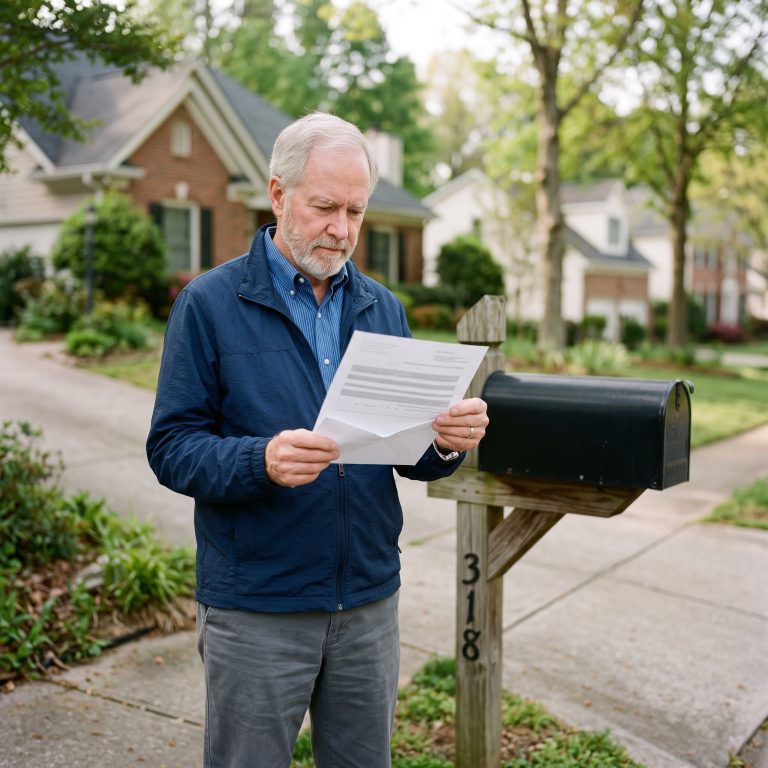
Patricia Reyes turned 62 this June and, mostly out of curiosity, started looking into what she might be owed from Social Security. Her marriage to her ex-husband lasted 16 years and ended in a divorce finalized in July 2023, just over three years ago. He earned considerably more than she did across those 16 years. He is 63 now, still working, and has not filed for his own retirement benefit. Patricia assumed that meant there was nothing for her to claim on his record until he did. She was wrong, and the reason why is the part most articles about Social Security claiming strategy skip.
The eligibility rules, in plain terms
Four conditions must be true at once to qualify.
Your marriage lasted at least 10 years, measured from the wedding date to the date the divorce was finalized, per the Social Security Administration’s (SSA) own policy manual on divorced-spouse eligibility. You are currently unmarried. Both you and your ex-spouse are at least 62 years old. And your ex-spouse is “entitled” to a Social Security retirement or disability benefit, which is a specific SSA term meaning your ex qualifies for one, not that they have necessarily started collecting it yet.
That last point is where Patricia’s assumption broke down. Her ex has not filed, but because their divorce has been final for more than two years, she does not need to wait for him to. SSA’s own policy calls this path “independently entitled”: once you’ve been divorced from the worker for at least two continuous years, you can file on their record even if they haven’t applied for their own benefit yet. AARP (the American Association of Retired Persons) confirms the same rule in plain language: “your former spouse doesn’t have to be collecting his or her retirement benefits yet for you to claim divorced-spouse benefits. However, if this is the case, the divorce must be at least two years old.” See AARP’s breakdown of who can collect from an ex-spouse. Patricia clears that bar by more than a year, so she can file on her own timeline.
If your divorce is less than two years old and your ex has not filed, you do have to wait until your ex claims their own benefit before you can claim a divorced spouse benefit on their record. Once your ex files, or once two years have passed since the divorce, whichever comes first, that restriction lifts.
What you actually get
A divorced spouse benefit is worth up to 50% of your ex-spouse’s full retirement age (FRA) benefit. AARP confirms the cap: “The most you can collect in divorced-spouse benefits is 50 percent of your former mate’s primary insurance amount,” what SSA calls the PIA, the payment your ex is entitled to at their own FRA, currently 67 for anyone born in 1960 or later.
Here is the part that trips people up most: this is not a bonus stacked on top of your own retirement benefit. The SSA pays you the higher of the two amounts, not both added together. If your own record would pay you more than half of your ex’s FRA benefit, you get your own amount and the divorced spouse rule adds nothing. If half of your ex’s benefit is larger than your own, Social Security effectively tops your own benefit up to that higher divorced spouse amount. Either way, one check, not two.
In Patricia’s case, her own earnings record would pay her roughly $900 a month at her full retirement age. Her ex’s FRA benefit is $2,400 a month. Half of that is $1,200, which is more than her own $900, so she is positioned to receive $1,200 a month as a divorced spouse rather than her smaller own-record amount. Kiplinger walks through the same mechanic in detail, explaining plainly that this amount is not stacked on top of your own benefit. You only come out ahead on it when your own benefit is the smaller of the two.
The claiming-age math
The 50% figure only applies at your own FRA. Claim earlier and the same early-claiming reduction that applies to your own retirement benefit applies here too. Claim later than FRA and nothing changes, because divorced spouse benefits never earn delayed retirement credits, the 8%-a-year growth people assume applies to every Social Security benefit.
Using Patricia’s numbers: her ex’s FRA benefit is $2,400 a month, so her maximum divorced spouse benefit at her own FRA of 67 is 50% of that, or $1,200. Filing early at 62, five years ahead of her FRA, triggers a 35% reduction, the standard schedule for five years early, which drops her to 32.5% of her ex’s $2,400, or $780 a month. Waiting until 70 instead of stopping at 67 changes nothing: her check stays flat at $1,200, since delayed credits don’t apply here.
| Claiming age | % of ex’s FRA benefit | Monthly benefit |
|---|---|---|
| 62 (5 years early) | 32.5% | $780 |
| 67 (full retirement age) | 50% | $1,200 |
| 70 | 50% (no increase past FRA) | $1,200 |
| Best for | Claiming at 62 fits someone who needs income now and has no other bridge income. Waiting until FRA captures the full 50% and is the latest age worth waiting to, since a divorced spouse benefit never grows past that point. | |
The practical lesson: there is no reason to delay a divorced spouse claim past your own FRA. Every month you wait between FRA and 70 is a month of the higher $1,200 payment you simply did not collect, with no future increase to make up for it. That is the opposite of the math on your own retirement benefit, where delaying to 70 keeps raising the check.
How to apply
You need two documents most people already have on hand: a marriage certificate and a divorce decree. The SSA also asks for your ex-spouse’s Social Security number if you know it, though the agency can still process your claim using your ex’s name, date of birth, and place of birth if you do not have it.

You can apply online, by phone at 800-772-1213, or in person at a local Social Security office. You can file as early as three months before you turn 62. Filing on an ex’s record is entirely your own application. Your ex is not contacted, does not sign anything, and takes no action of any kind for your claim to be processed.
What people get wrong about this benefit
The single biggest reason people avoid filing is the fear that it will hurt their ex financially or that their ex will find out. Neither is true. AARP states it plainly: benefits received “on the earnings record of your ex-spouse will not change what that person can receive from Social Security.” Read AARP’s answer on whether a divorced spouse benefit affects the ex directly. The same protection extends to an ex who has remarried: their current spouse’s benefit is untouched too. And the SSA does not notify your former spouse when you apply. If your ex asks directly whether someone is drawing on their record, the agency can confirm that fact, but it will not share where you live or any other personal information about you.
The second common mistake is assuming that remarrying permanently closes the door on an ex’s record for good. Remarrying does end your ability to claim a divorced spouse benefit on a prior marriage while that later marriage is active, at any age, since this benefit only exists while your ex is still living. But if the later marriage ends, through divorce, annulment, or death, eligibility on the earlier marriage can come back, as AARP’s divorced-spouse guide explains, as long as that original marriage still meets the 10-year rule. This is not a one-time-only benefit that disappears the moment you remarry once. Still-married couples follow a different claiming order, so do not assume the same math applies once you are divorced.
The third mistake is treating this as something you cannot pursue without your ex’s cooperation. You do not need your ex’s Social Security number, current address, consent, or awareness. You need your own marriage certificate and divorce decree, and the process runs entirely on your own application.
Frequently asked questions
Will filing for a divorced spouse benefit lower what my ex-spouse receives?
No. Your claim runs on your ex’s earnings record but does not touch their payment amount in any way. Your ex collects exactly what they are entitled to, whether or not you ever file, and the same is true for their current spouse if they have remarried.
Will my ex-spouse find out that I filed?
The Social Security Administration (SSA) does not notify your ex when you apply. If your ex specifically asks the agency, it can confirm that someone is collecting on their record, but it will not disclose your address or any other personal details.
Can I still claim if my ex has remarried?
Yes. Your ex’s current marriage has no effect on your eligibility. Your divorced spouse benefit is based entirely on your own marriage to your ex having lasted 10 years or more and you remaining currently unmarried yourself.
What if I remarry after claiming a divorced spouse benefit?
Remarrying generally ends your divorced spouse benefit, at any age, while that new marriage continues. If that later marriage ends through divorce, annulment, or death, you can become eligible again on your original ex’s record, provided the 10-year marriage rule is still met.
Does waiting past my full retirement age increase my divorced spouse benefit?
No. Divorced spouse benefits max out at 50% of your ex’s full retirement age (FRA) benefit and do not receive delayed retirement credits. Waiting past your FRA only means missing months of payment with no future increase to offset them.