A Matter of Balance and Tai Chi for Arthritis: Fall-Prevention Classes You Can Get Free or Covered
By YourResourceHub Editorial Team · Reviewed by Steven Sun · 9 min read · Last updated October 13, 2026
- A Matter of Balance runs 8 two-hour sessions, once a week for 8 weeks or twice a week for 4 weeks, in groups of 8 to 12 led by trained coaches.
- Tai Chi for Arthritis for Fall Prevention runs 8 weeks of two one-hour classes, or 16 weeks of one class, taught by certified instructors.
- Local Area Agencies on Aging fund these classes through Older Americans Act Title III-D money, usually free or low-cost at a senior center.
- Original Medicare does not pay for either class, but some Medicare Advantage plans cover them at no extra cost through a fitness benefit.
A Matter of Balance and Tai Chi for Arthritis for Fall Prevention are the two fall prevention classes for seniors most often funded at local senior centers. Local senior centers draw on Older Americans Act Title III-D grants for that. Some Medicare Advantage plans also cover the same classes at no extra cost as a fitness benefit, though Original Medicare does not.
In this article
- What these classes actually are
- Who qualifies for fall prevention classes for seniors
- How the classes get paid for
- How to find and enroll in a class
- What seniors get wrong
- Frequently asked questions
Over 14 million older adults, about 1 in 4 people age 65 and older, fall every year, according to the Centers for Disease Control and Prevention (CDC), the federal public health agency, as reported by the National Council on Aging. Two specific classes cut that risk: A Matter of Balance and Tai Chi for Arthritis for Fall Prevention.
You can often take them free at a local senior center. Some Medicare Advantage plans also cover them at no extra cost through a fitness benefit, depending on where you live and which plan you have.
What these classes actually are
The Centers for Disease Control and Prevention runs an initiative called Stopping Elderly Accidents, Deaths, and Injuries (STEADI). STEADI gives doctors screening tools to spot a patient’s fall risk and refer them to community exercise programs.
This is different from the one-time clinical visit covered under Medicare Part B’s fall-risk and home-safety evaluation. There, a physical therapist assesses your balance and gait, and an occupational therapist reviews your home.
That evaluation is a clinical assessment your doctor orders. The two programs below are the ongoing group exercise classes your doctor, or you, would point you toward next.
Both programs carry an “Evidence-Based Program” designation from the National Council on Aging’s (NCOA) Center for Healthy Aging, the nonprofit that oversees their national network of local providers. That designation is the same evidence-based category the Administration for Community Living (ACL) requires Older Americans Act Title III-D grant money to fund.
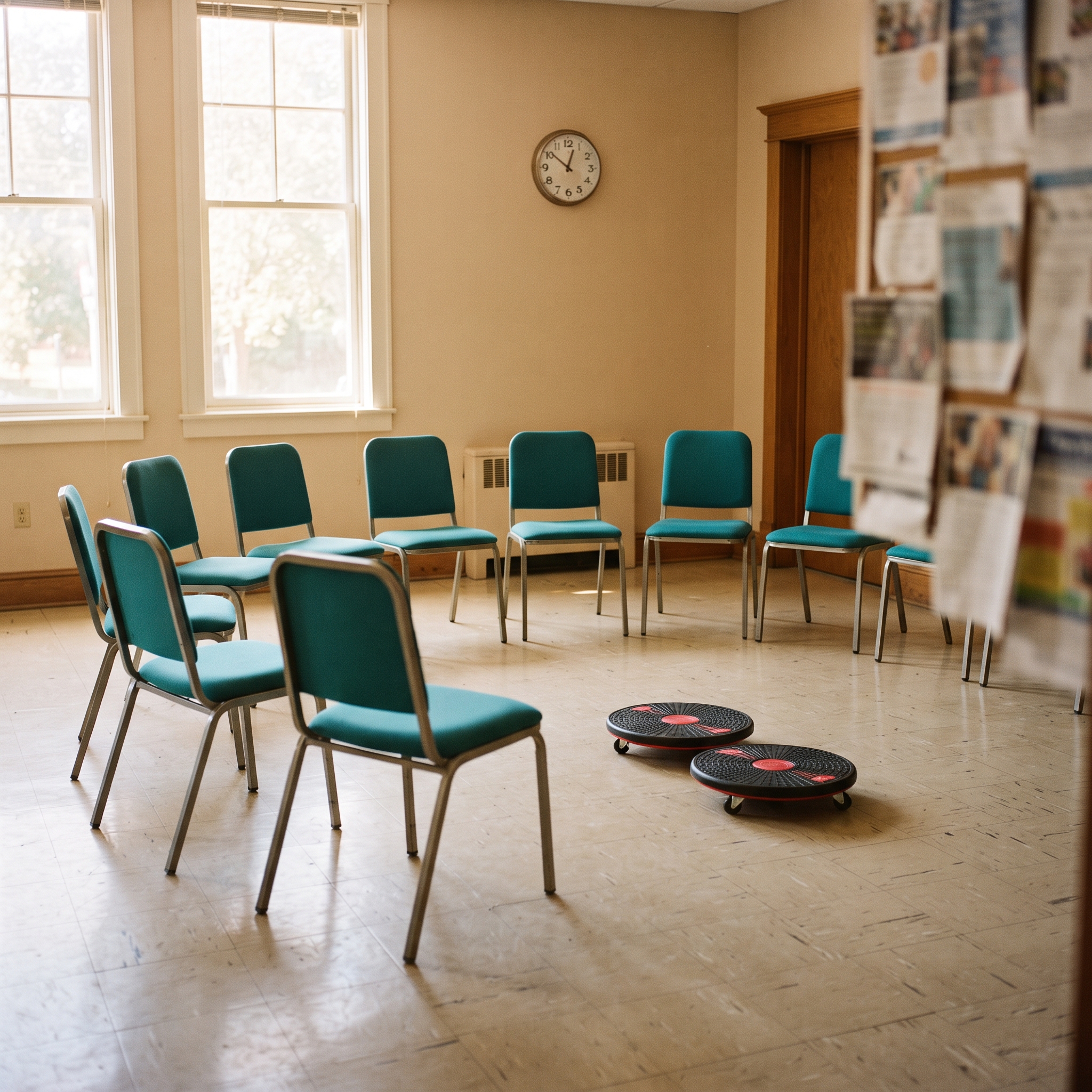
A Matter of Balance runs 8 two-hour sessions, either once a week for 8 weeks or twice a week for 4 weeks. Classes run in small groups of 8 to 12 people, led by two trained coaches who do not need a clinical license. Sessions combine discussion of home safety and reducing the fear of falling with practical strength, balance, and flexibility exercises.
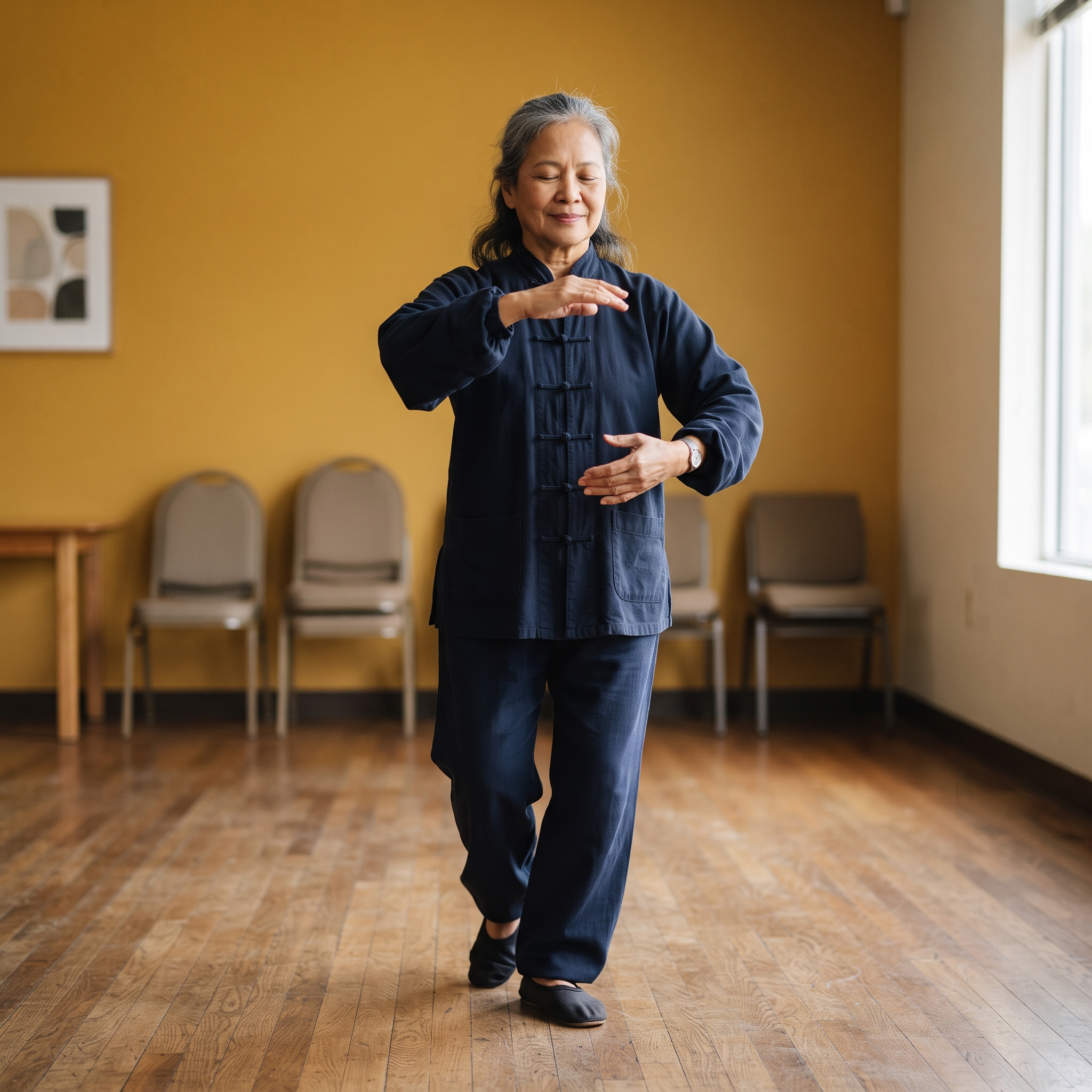
Tai Chi for Arthritis for Fall Prevention runs 8 weeks of two one-hour classes a week, or 16 weeks of one class a week. A certified Tai Chi for Health instructor leads the group through slow, weight-shifting movements. Participants are encouraged to practice at home for about 30 minutes most days between classes.
Who qualifies for fall prevention classes for seniors
Neither program has an income test. Older Americans Act programs generally serve adults 60 and older. Medicare Advantage fitness benefits follow your own plan’s membership rules instead, which usually means you are already 65 or older and enrolled in that plan.
The access path is what differs, not the eligibility itself. A senior-center class funded through Older Americans Act Title III-D money is open to any community-dwelling older adult who shows up and registers. A Medicare Advantage fitness benefit only works if your specific plan chose to include one, so you have to check your own coverage rather than assume it.
How the classes get paid for
The Older Americans Act (OAA) is a 1965 federal law that funds services for adults 60 and older. Title III-D of the law funds “disease prevention and health promotion services,” a distinct funding stream from Title III-B, which pays for things like transportation and homemaker help.
The Administration for Community Living (ACL), the federal agency that administers the Older Americans Act, sends formula grants to state aging agencies. States pass that money down to local Area Agencies on Aging and senior centers, and states are required to spend part of it on evidence-based programs like these two classes.
Separately, a senior enrolled in a Medicare Advantage plan may get the same class covered at no extra cost through a fitness benefit, sometimes marketed under a name like SilverSneakers. Original Medicare does not cover gym memberships or fitness programs at all.
A Medicare Advantage fitness benefit is a supplemental benefit that some, not all, plans add on top of Original Medicare’s coverage. Whether your plan includes one, and whether it covers an off-site class like these two programs specifically, depends on your plan’s own Evidence of Coverage booklet. Call the member services number on your insurance card to ask directly rather than assuming.
Your primary care doctor may bill Medicare Part B separately for the visit where they refer you to one of these classes. A provider who doesn’t accept Medicare’s assignment can charge you more for that visit itself.
See Medicare Part B’s limiting charge rules for how that works. That billing issue is separate from the class itself, which is typically free or covered.
| Factor | A Matter of Balance | Tai Chi for Arthritis for Fall Prevention |
|---|---|---|
| Sessions and length | 8 two-hour classes: once a week for 8 weeks, or twice a week for 4 weeks | 8 weeks of two one-hour classes a week, or 16 weeks of one class a week |
| Format | Small group of 8-12, discussion plus exercise, led by two trained coaches | Group Tai Chi movement class led by a certified instructor, with daily home practice encouraged |
| Typical cost or funding | Usually free through Older Americans Act Title III-D money at a senior center; sometimes covered by a Medicare Advantage fitness benefit | Same two paths: free at a senior center, or covered by a Medicare Advantage fitness benefit |
| Evidence base | NCOA “Evidence-Based Program” designation; required category for Older Americans Act Title III-D funding | Developed by Dr. Paul Lam from Sun-style Tai Chi; also carries NCOA’s “Evidence-Based Program” designation |
| Best for | Seniors who want practical safety steps combined with exercise, in a discussion-based group | Seniors who want one ongoing physical practice, including daily home practice |
How to find and enroll in a class
Say a 72-year-old named Dana wants to join a class near her. She has two paths to check, and they do not depend on each other.
For the senior-center path, Dana calls the Eldercare Locator at 1-800-677-1116 or searches her local Area Agency on Aging’s website. She asks specifically for A Matter of Balance or Tai Chi for Arthritis for Fall Prevention. Most senior centers that offer either class list it as free or low-cost, since it is funded through Older Americans Act Title III-D money rather than billed to her.
For the Medicare Advantage path, Dana pulls out her plan’s Evidence of Coverage booklet or calls the member services number on her insurance card. She asks whether her plan’s fitness benefit, if it has one, covers an off-site balance or Tai Chi class and whether it routes through a specific fitness network.
What seniors get wrong
Not every “balance class” at a gym or community center is one of these two specific programs. Only classes that follow the actual A Matter of Balance or Tai Chi for Arthritis for Fall Prevention curriculum are the evidence-based versions. Those are the ones funded through Older Americans Act money or listed as a plan’s fitness benefit.
A second common mistake is assuming Original Medicare pays for a gym membership or either class directly. It does not. Only a Medicare Advantage plan’s own supplemental fitness benefit might, and only if that plan chose to include one.
A third mistake is assuming a Medicare Advantage fitness benefit always means SilverSneakers by name. Plans use different fitness-network brands, so check your own plan’s materials for the actual program name rather than asking for SilverSneakers specifically.
Frequently asked questions
Do I have to be low-income to take A Matter of Balance or Tai Chi for Arthritis for Fall Prevention? No. Neither program has an income test. Older Americans Act Title III-D funding generally serves any community-dwelling adult 60 or older, regardless of income, and a Medicare Advantage fitness benefit depends only on your plan membership, not your income or assets.
Does Original Medicare cover these classes? No. Original Medicare does not cover gym memberships or fitness programs, according to Medicare.gov. Some Medicare Advantage plans add a fitness benefit that covers classes like these, but that is a supplemental benefit the plan chooses to include, not standard Part B coverage.
How do I know if my Medicare Advantage plan covers a fitness benefit? Check your plan’s Evidence of Coverage booklet, or call the member services number printed on your insurance card. Ask specifically whether the fitness benefit covers an off-site balance or Tai Chi class, since some fitness benefits only cover on-site gym visits and exclude community classes.
What age do I need to be to join a class at a senior center? Older Americans Act-funded programs generally serve adults 60 and older, which is younger than Medicare’s eligibility age of 65. Exact minimum ages can vary by local provider, so a senior center can confirm its own age requirement when you call to register.
Are these classes the same as the Medicare Part B fall-risk evaluation? No. The Part B evaluation is a one-time clinical visit where a physical therapist assesses your balance and an occupational therapist reviews your home. A Matter of Balance and Tai Chi for Arthritis for Fall Prevention are the ongoing group exercise classes you might be referred to afterward.