
Naturally Occurring Retirement Communities: Why the Federal Program Behind Them Stopped Funding New Sites in 2005
9 min read · Last updated August 24, 2026
- A Naturally Occurring Retirement Community (NORC) is not senior housing. It is ordinary housing that was never built for older adults but where a large share of residents have simply aged in place over time.
- Federal funding for NORC Supportive Service Programs (NORC-SSP) ran from 2002 to 2005 through the Administration on Aging, not the U.S. Department of Housing and Urban Development (HUD), and no new federal grant round has been awarded since.
- Today the model runs almost entirely on state and local budgets. New York splits costs three ways among the state, the city, and the building; Maryland currently awards $1.3 million in state funds to seven organizations.
- The federal definition sets the bar at 40% of heads of household age 60 or older, though most states that still fund the model apply their own, more specific version of that threshold.
In this article
- What a NORC-SSP actually is
- Who qualifies, and how a community gets designated
- What a NORC-SSP actually provides
- How to find out if you already have one
- What families get wrong
- Frequently asked questions
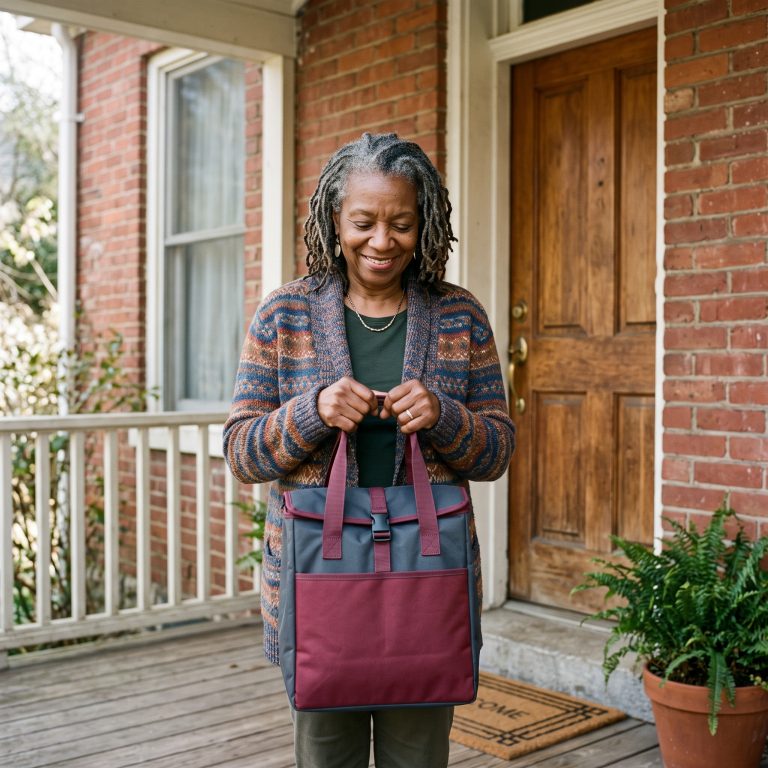
Last month, in the lobby of the 900-unit Yonkers, New York apartment cooperative where Ruth Feldman, 82, has lived since 1990, a community health worker set up a blood pressure cuff on a folding table and spent ten minutes checking in with her, her second such visit that month. Ruth did not schedule an appointment, drive anywhere, or pay a co-pay. The visit came to her because her building has run a Naturally Occurring Retirement Community (NORC) Supportive Service Program, or NORC-SSP, since the mid-1990s, one of dozens operating quietly inside ordinary apartment buildings never built as senior housing.
What a NORC-SSP actually is
A Naturally Occurring Retirement Community (NORC) is not a program, and nobody applies to live in one. It is simply a building, a cluster of buildings, or a neighborhood where a large share of residents have grown older in the same place over decades, without anyone designing the property for that outcome. Ruth’s Yonkers co-op qualifies the same way thousands of ordinary buildings do nationwide: nobody moved in at 65 to be near other retirees. They moved in decades earlier and simply stayed.
A NORC-SSP is the layer added on top of that fact: a funded partnership, usually between a state or local aging agency, a nonprofit provider, and the building itself, that brings case management, health screenings, transportation, and social programming directly to residents where they live. A Congressional Research Service report on the model is explicit about why that matters: nothing about a NORC-SSP requires a resident to move, qualify for a waiting list, or give up a home they already own or rent.
The distinction people miss most is the difference between a NORC and a designated senior-living building, such as housing built for older or disabled residents through the U.S. Department of Housing and Urban Development (HUD). Both can employ a staff person who coordinates services, but HUD’s Service Coordinators in Multifamily Housing program only applies to properties already designated for seniors, such as Section 202 housing. A NORC-SSP does the opposite: it finds older residents already there, in ordinary housing nobody designed for them.
Who qualifies, and how a community gets designated
NORC-SSP is often assumed to be a live HUD grant program today. It is not, and that assumption is the single most consequential error a family or building board can make while researching it. The Congressional Research Service report cited above traces the federal money to the Administration on Aging, the agency that then ran Older Americans Act (OAA) programs inside Health and Human Services, not HUD. Between 2002 and 2005 it distributed $21.4 million in OAA Title IV research funding across 41 pilot sites in 25 states, with each site raising $1 locally for every $3 federal. No new federal grant round has been awarded since FY2005. The 2006 OAA amendments defined a NORC and authorized a follow-on effort, Community Innovations for Aging in Place, but it has never received a meaningful appropriation.
What survived is a patchwork of state and local funding, not a federal entitlement. New York kept the model alive after 2005 by splitting costs three ways: state, city or county, and the building each cover one third, often in-kind. That structure now supports 43 recognized programs statewide, per reporting from Shelterforce published August 18, 2026. Maryland’s Department of Aging currently awards $1.3 million in state funds to seven organizations, and Missouri funds four regional centers at roughly $97,000 apiece, with the rest from philanthropy.
How large a concentration of older residents does a community need? The OAA sets the federal bar at 40% of heads of household age 60 or older, or a locally established “critical mass.” A community does not need every resident to be a senior, just enough that a funder believes a program is worth paying for. States apply their own, more specific thresholds. New York’s “classic” NORC needs 40% of units occupied by residents 60 or older and roughly 250 to 500 older residents; its “neighborhood” NORC drops to 30% urban or 20% rural, spread across smaller buildings. Co-op administrators put the practical floor more plainly: a building generally needs near 1,000 units to support its own office, per the same Shelterforce reporting.
| Factor | NORC-SSP | Designated senior living (HUD Section 202 or private) | Staying in place with no coordinated support |
|---|---|---|---|
| Do you have to move | No, services come to your existing home | Yes, into a building built or designated for older or disabled residents | No |
| Typical wait | None, if your building already runs a program | Often months to years for a HUD-assisted unit | None |
| Who funds the services | State/local aging budget plus a building or nonprofit match; no federal grant since FY2005 | HUD operating subsidy plus a service coordinator budget | No coordinated funding; family arranges and pays for help individually |
| What it provides | Case management, health screenings, transportation, and social programming delivered on-site | Similar coordinated services, built into a purpose-designed property | Whatever a resident or family arranges on their own |
| Best for | Someone who wants to stay exactly where they already live, in a building or neighborhood with enough older residents to support a funded program | Someone who wants or needs to move into housing specifically staffed for aging or disability | Someone in a building too small for a program, or in a state where none is funded |
What a NORC-SSP actually provides
A NORC-SSP office typically delivers a defined set of core services rather than open-ended help. Case management sits at the center: a coordinator, often a social worker, tracks each resident’s needs and connects them to benefits or family when something changes. Health screenings, often a nurse doing blood pressure checks right in the lobby, catch small problems before they turn into emergency-room visits. Transportation addresses one of the most common reasons an older adult has to leave ordinary housing. Social programming, from food pantries to exercise classes, works against isolation. Programs lean on annual resident surveys to decide what to add next.
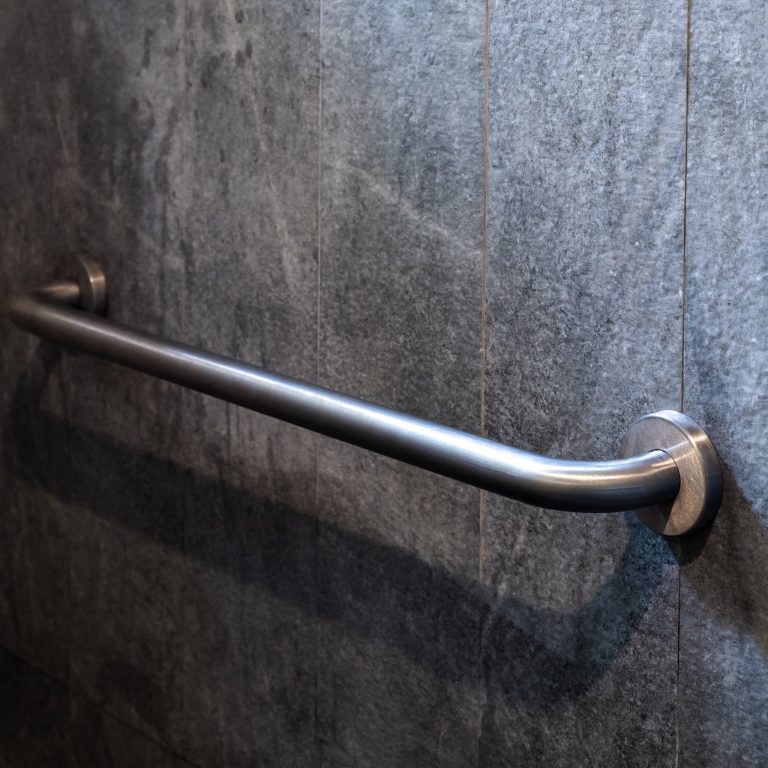
A resident whose biggest barrier to staying is a set of front steps or a bathroom without grab bars is better served by combining a NORC-SSP’s case management with a look at home modification grants and loans for aging in place, since a NORC office coordinates services rather than paying for construction.
How to find out if you already have one
The fastest way to find out is also the simplest: ask your building’s management office or co-op board whether a NORC-SSP already operates there. Most facility staff know if a nurse or social worker holds regular hours on-site, even if the resident asking has never used it. If nobody on-site knows, your state or local Area Agency on Aging is the next call. These agencies, covered in our guide to Area Agencies on Aging and the Eldercare Locator, keep lists of which buildings already run a funded program.
If your building qualifies but has never had one, somebody still has to start it, and that is not a job for a single resident acting alone. Building management, a co-op board, or a nearby nonprofit typically has to partner up and apply when a state opens its next funding round, the way Maryland runs an annual competitive grant opportunity. There is no guarantee a given building gets selected, and in most of the country today no NORC-SSP exists at all, since funding is concentrated in a handful of states. Asking is still worth doing. A building that never asks is never considered.
What families get wrong
The most common mistake is treating a NORC-SSP like another flavor of senior housing, the kind you research, tour, and eventually move into. It is the opposite. If your parent has lived in the same house or apartment for twenty years, a NORC-SSP, if one already exists nearby, comes to that address. Nobody applies to move in, and nobody has to sell a home or break a lease. Confusing this with assisted living is the fastest way to talk a parent out of a service that would have cost nothing and required no disruption.
The second mistake is assuming coordinated help like this always carries a bill. A family that assumes the cost falls on the resident sometimes skips calling entirely, on the theory that a program this useful must be expensive. It usually is not. The local match in New York, and the state grant dollars in Maryland and Missouri, are what keep the service free at the point of use. That structure is also why coverage is uneven: a state has to keep choosing to pay its share, and not every state has.
Frequently asked questions
Is a NORC-SSP the same thing as HUD senior housing? No. A NORC-SSP is funded mainly through state and local aging budgets today, not HUD, and it operates inside ordinary housing that was never built or designated for seniors. HUD’s separate Service Coordinators program only applies to housing already designated for older or disabled residents, such as Section 202 buildings.
Do I have to move to use a NORC-SSP? No. That is the entire point of the model. Services are brought to a building or neighborhood where older residents already live in large numbers. Nobody applies to move in, and there is no waiting list for a unit, since you are not moving anywhere.
Does it cost anything to use the services? Usually not for the resident. Funding comes from a mix of state or local aging budgets and a local match from the building or a partner nonprofit, not from resident fees. Availability varies significantly by state, since not every state currently funds the model.
How do I find out if my building already has a program? Ask your building management office or co-op board first, since most staff know if a nurse or social worker holds regular hours on-site. If nobody knows, contact your state or local Area Agency on Aging, which keeps a list of funded NORC-SSP sites in its service area.
What if my building or neighborhood doesn’t have one yet? Someone still has to apply when a state opens its next funding round. Building management, a co-op board, or a local nonprofit typically leads that application, since individual residents cannot apply for state NORC funding on their own.