Medicare Pays $0 Toward a Hearing Aid: What Actually Fills the Gap
By YourResourceHub Editorial Team · Reviewed by Steven Sun · 7 min read · Last updated October 20, 2026
- Original Medicare pays $0 toward a hearing aid device. You pay the full cost no matter where you buy it.
- Part B does cover a diagnostic hearing and balance exam ordered by your doctor, after your $283 deductible, at 20% coinsurance.
- Over-the-counter hearing aids, a Food and Drug Administration (FDA) category open to adults 18 and older with mild to moderate hearing loss, have required no prescription or exam since October 17, 2022.
- 98% or more of individual Medicare Advantage plans now include some hearing benefit, per KFF (a nonpartisan health policy research organization), but the allowance and rules vary by plan.
Original Medicare does not pay anything toward a hearing aid device or the exam to fit one. The only paths to help are buying an FDA-regulated over-the-counter aid without a prescription, or enrolling in a Medicare Advantage plan that includes a hearing allowance as a supplemental benefit.
In this article
- What Original Medicare actually covers
- Who can buy an over-the-counter hearing aid
- What a Medicare Advantage hearing allowance buys
- How to get a hearing exam covered
- What seniors get wrong
- Frequently asked questions
What Original Medicare’s hearing aid coverage actually includes
Part B covers a diagnostic hearing and balance exam, but only when your doctor orders it to find out whether you need medical treatment. After you meet your $283 Part B deductible, you pay 20% of the Medicare-approved amount, and you may owe an added copayment if you’re seen in a hospital outpatient setting.
There’s a separate rule for routine checkups. You can see an audiologist once every 12 months without a doctor’s order, but only for non-acute hearing loss (the slow kind that builds up over years) or for diagnostic services tied to a surgically implanted hearing device. Outside that narrow window, your provider has to order the exam.
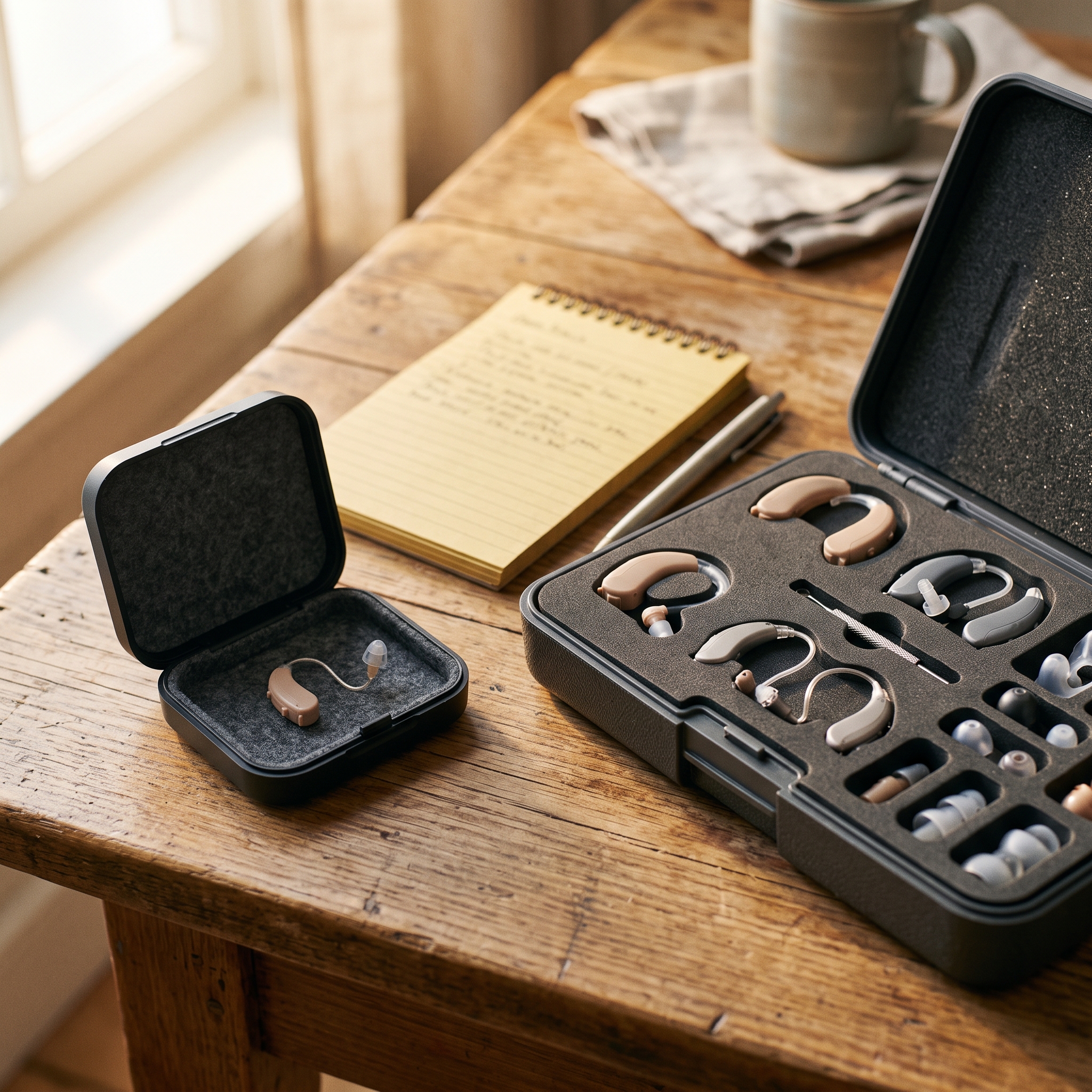
None of that touches the hearing aid itself. Medicare’s own coverage page states plainly that it doesn’t cover hearing aids or the exams for fitting them. You pay 100% of the device, whether you buy it at a big-box store or through an audiologist’s office.
Who can buy an over-the-counter hearing aid
For instance, say a 68-year-old named Harold has noticed he’s been turning the TV volume up and asking his wife to repeat herself. Before October 17, 2022, his only legal path to a hearing aid ran through a licensed professional. That’s the date the FDA’s over-the-counter (OTC) hearing aid rule took effect, creating a device category adults 18 and older can buy in a store or online with no exam, no prescription, and no professional fitting.
The category only covers perceived mild to moderate hearing loss. The FDA is explicit that OTC devices aren’t built to handle severe or profound loss, and someone in that range should see a licensed hearing health care professional instead, since an OTC aid’s limited output may not help enough. Close to 30 million adults in the U.S. have some degree of hearing loss, and the FDA notes that only about one in five people who could benefit from a hearing aid actually use one.
Harold’s case is a mild one, so he’s a candidate for the OTC path. Someone with a long-documented, severe loss would need to go the prescription route regardless of cost.
What a Medicare Advantage hearing allowance buys
Medicare Advantage plans can offer extra benefits Original Medicare doesn’t, including vision, dental, and hearing. Nearly every plan now does: KFF reports that 98% or more of individual Medicare Advantage plans include some hearing benefit, a share that’s held steady for several years even as other extras have shrunk.
What that benefit actually buys is where plans differ, and it’s not something this article can compare carrier by carrier. Federal marketing rules bar implying that one plan’s hearing allowance beats another’s, so the honest answer is to check your own plan’s Evidence of Coverage for the dollar amount, the network of providers you have to use, and whether the allowance resets every year or every two years.
The table below lays out the structural differences between the three paths, since the mechanics (not the dollar amounts) are the same for everyone.
| Pathway | Exam or prescription needed | Who pays for the exam | Who pays for the device |
|---|---|---|---|
| Original Medicare (device only) | Exam is optional, device needs none | You pay 20% plus the deductible, if a doctor orders the exam | You pay 100% of the device |
| OTC hearing aid (FDA category) | No exam or prescription required | Not applicable | You pay 100%, typically at a lower price point than a professionally fit device |
| Medicare Advantage hearing benefit | Usually requires an in-network provider visit | Cost-sharing set by the plan | Plan allowance covers part or all, up to a plan-set limit |
How to get a hearing exam covered
Harold’s next move is to ask his primary care doctor for a referral tied to a medical reason, not simply “I want a hearing aid.” An order for a diagnostic hearing and balance exam is what triggers Part B’s 20% coinsurance coverage; walking straight into an audiologist’s office for a fitting consultation does not.
If Harold’s loss is the slow, non-acute kind, he also has the once-every-12-months self-referral option without an order at all. Either way, once the exam confirms what he and his doctor suspected, the decision about the device itself (OTC versus a Medicare Advantage allowance versus paying out of pocket for a prescription aid) is a separate step that Medicare’s exam coverage doesn’t resolve for him.
What seniors get wrong about Medicare and hearing aids
The most common mistake is assuming that because Medicare paid 80% of the diagnostic exam, it will also help with the hearing aid that exam leads to. It won’t, under Original Medicare.
The second common mistake runs the other direction: buying an OTC device for a loss that’s actually severe, because it’s cheaper and easier to get, only to find it doesn’t provide enough amplification. The FDA’s own guidance exists precisely because that mismatch is common enough to need a warning.
A third, quieter mistake is enrolling in a Medicare Advantage plan assuming “it covers hearing” means the aid is free. Check the actual allowance and network rules in your plan’s Evidence of Coverage before you assume anything is covered in full.
Frequently asked questions
Does Medicare ever pay for a hearing aid if my doctor says I need one? No. Original Medicare excludes hearing aids regardless of medical necessity or a doctor’s recommendation. The only Medicare-related paths to help are a Medicare Advantage plan’s supplemental hearing benefit or the lower-cost OTC category.
Can I use an OTC hearing aid if I have severe hearing loss? The FDA designed the OTC category only for perceived mild to moderate hearing loss in adults 18 and older. If your loss is severe or profound, an OTC device’s limited output likely won’t help enough, and the FDA recommends seeing a licensed hearing professional instead.
Will every Medicare Advantage plan cover part of a hearing aid? Most will, since 98% or more of individual plans now include some hearing benefit, but the dollar allowance, network, and renewal period vary by plan. Check your own plan’s Evidence of Coverage rather than assuming a specific amount.
Does Medicare cover a hearing exam if I don’t have a specific medical reason? Part B covers a diagnostic exam your doctor orders to investigate a possible medical issue. You can also self-refer to an audiologist once every 12 months for non-acute hearing loss without an order, but a routine check with no medical trigger outside that window isn’t automatically covered.
What’s the difference between the exam Medicare covers and a hearing-aid fitting? A diagnostic hearing and balance exam checks whether you need medical treatment, and Part B pays 80% of it after your deductible. A fitting exam, which adjusts a device to your ears, is treated as part of the hearing aid purchase and isn’t covered at all.